Allan Houser, the iconic Chiricahua Apache sculptor, had famously started his career in paintings and then eventually transitioned to sculpture.
Oreland Joe has been working that same path but in reverse. Having started his career as a sculptor, and achieving a great amount of success, Joe started working from an easel with paint. But now, after more than two years of working almost exclusively as a painter, the Navajo/Southern Ute artist is once again bringing sculpture back into his studio—and occasionally, because his stone slabs are so big, outside of the studio as well.
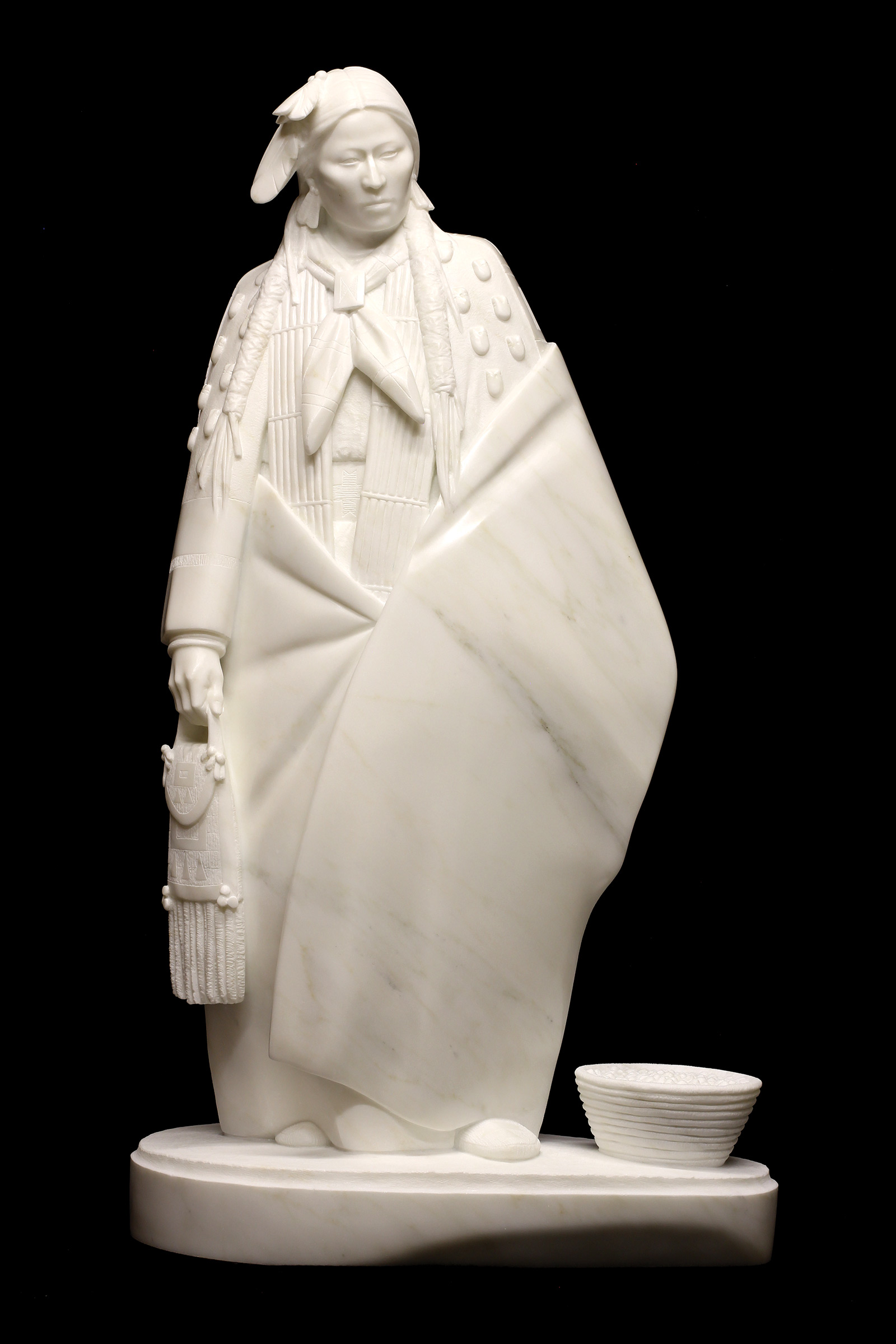 Choke Cherry Harvest Along the Pine River, Italian marble. Courtesy the artist.
“I enjoy being spontaneous in the studio,” Joe says from his home in Kirtland, New Mexico. “I have people come in wondering what I’m going to be doing tomorrow. I’m spontaneous because it’s an itch that has to be scratched.”
Joe was nurtured as an artist by his high school teacher in the early 1980s. “Her name was Mary Peterson and she was well known in the Dallas-Fort Worth area as a painter and sculptor. She really experimented with all types of media, including craft and fine art. She was a great teacher because she showed her students all the ways they could create art,” Joe says. “After high school I was working in a butcher shop, but I had tried my hand at sand painting, and then later sculpture. I was given five stones at one point—ones as big as my fist to the size of a volleyball. Fortunately, they were hard.”
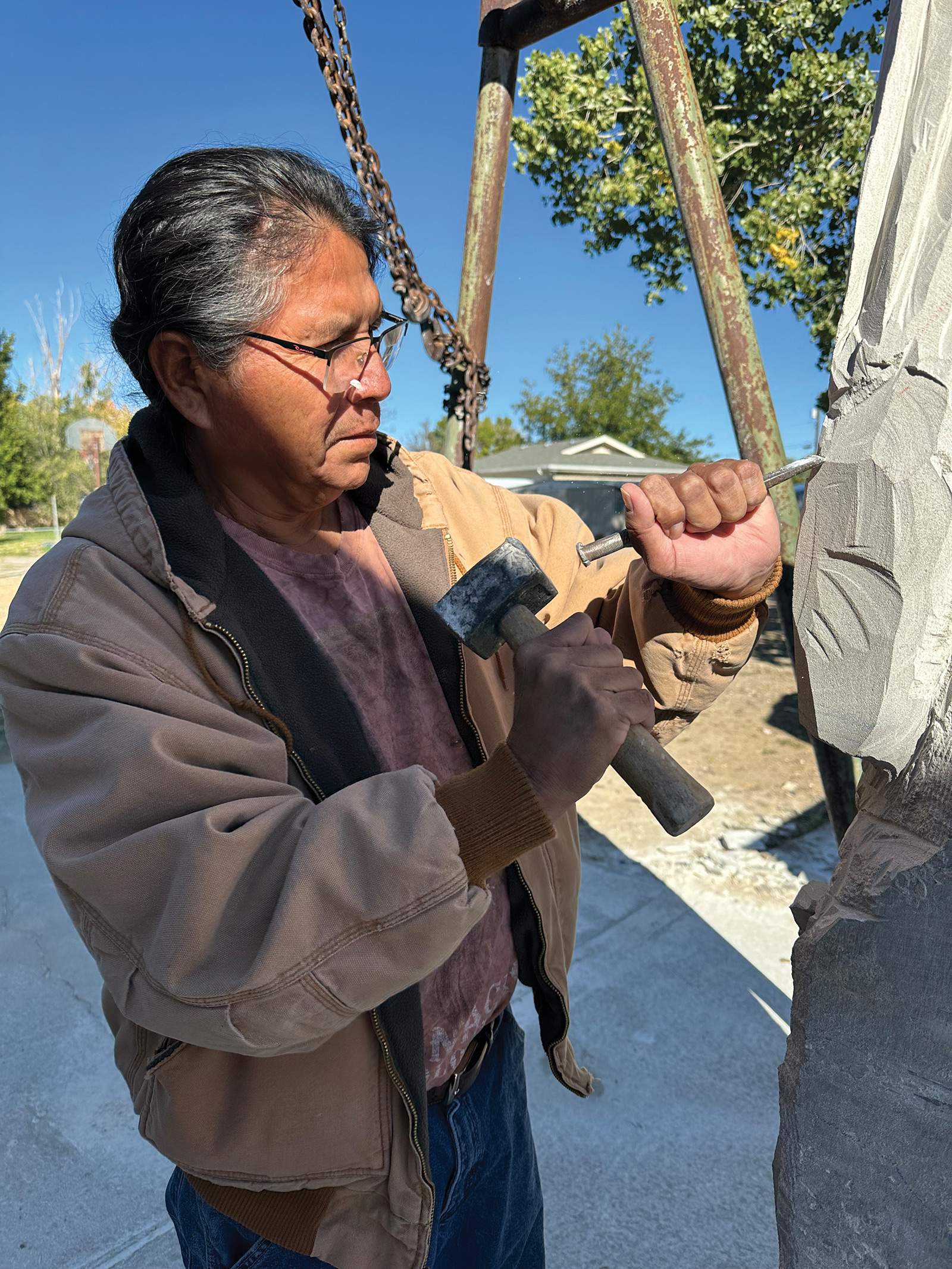 Oreland at work in Kirtland, New Mexico. Courtesy the artist.
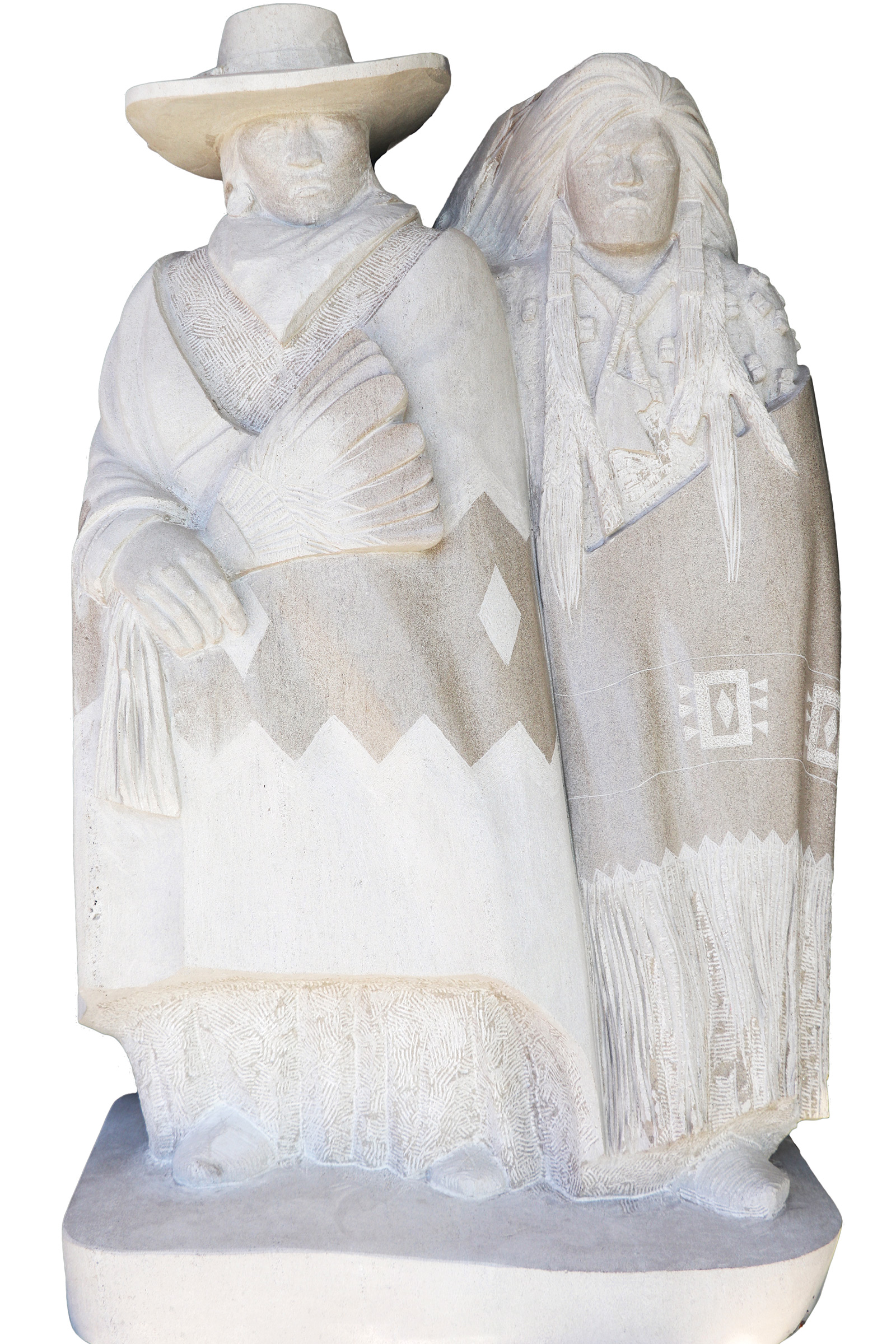 Crow Women, Indiana limestone, 54 x 32 x 22”. Courtesy Legacy Gallery, Scottsdale, AZ, and Santa Fe, NM.
The young artist scraped, clawed and pounded at those stones with anything he could get his hands on, from screwdrivers and pliers to pocketknives and hammers. “My mom’s front porch was covered in dust,” he remembers, adding that he was living in Shiprock, New Mexico, at the time. Later influences would come from the library, where he would read art magazines and books, some of them with images of the famous Italian and Greek sculptures that were so celebrated all around the art world. Those European influences would creep into his work and merge with his own Native American heritage, creating an exciting mixture of two very divergent cultures. By 1984, Joe would visit Italy and witness firsthand the works of Michelangelo, Bernini and others.
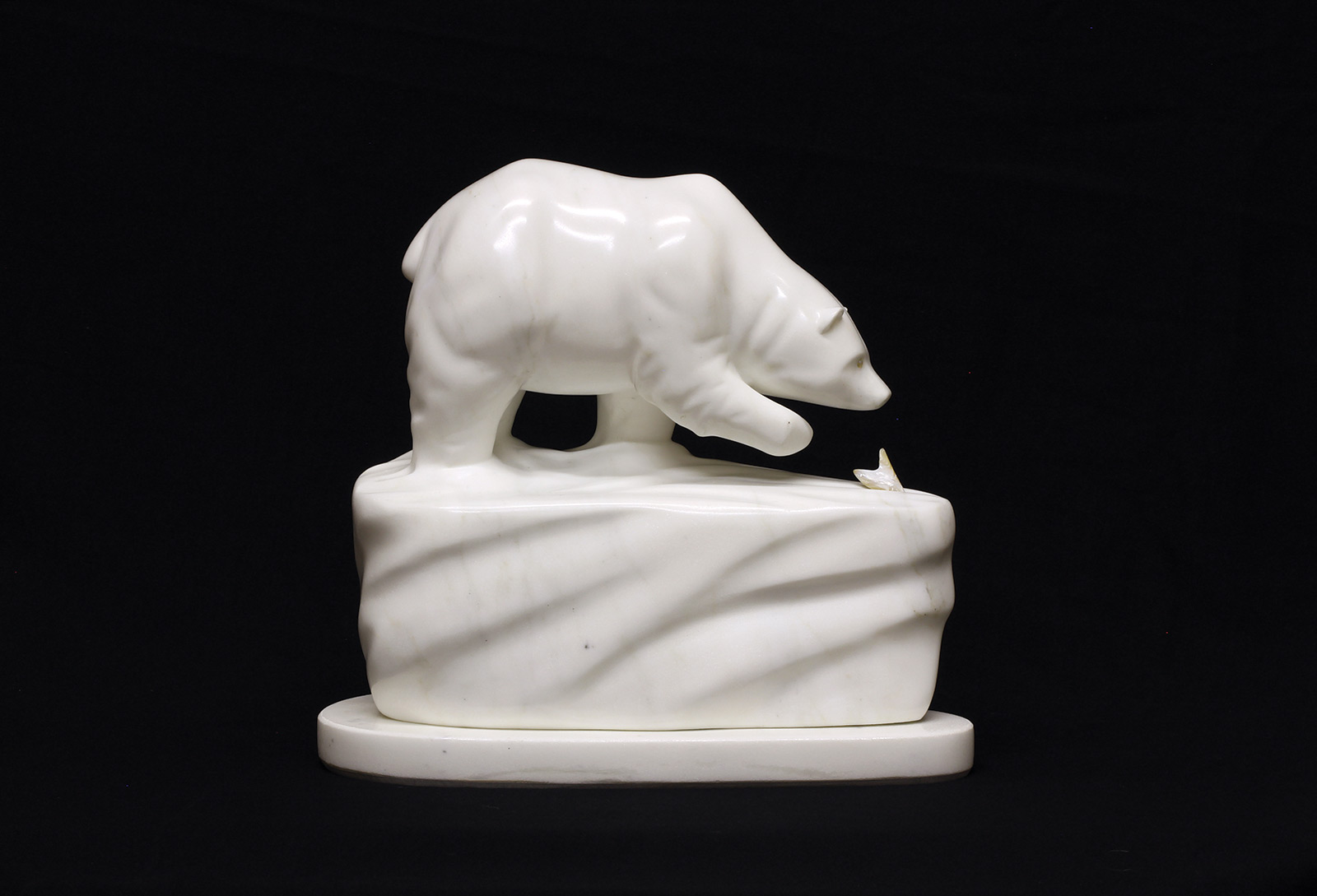 Goldfish, Italian marble, pearl and opal, 11½". Courtesy the artist.
Back in the Southwest, Joe’s work continued to progress as he learned new techniques and became more proficient with better tools. Gone were the days of pocketknives, and in their place were silicon carbide bits, professional-quality hand tools and various sandpapers and finishing materials. He also started working in larger stones, and even harder stones, which required even more skill. “For a long time I worked a lot in rust-colored alabaster, which was prime and that was what the market was buying. But everyone knew that if you were going to move to masterhood, you’d have to carve in marble. And that’s what I worked toward,” the artist says. “It’s three to four times harder than alabaster. For me, especially after seeing those great Italian and Greek sculptures, marble was the ultimate.”
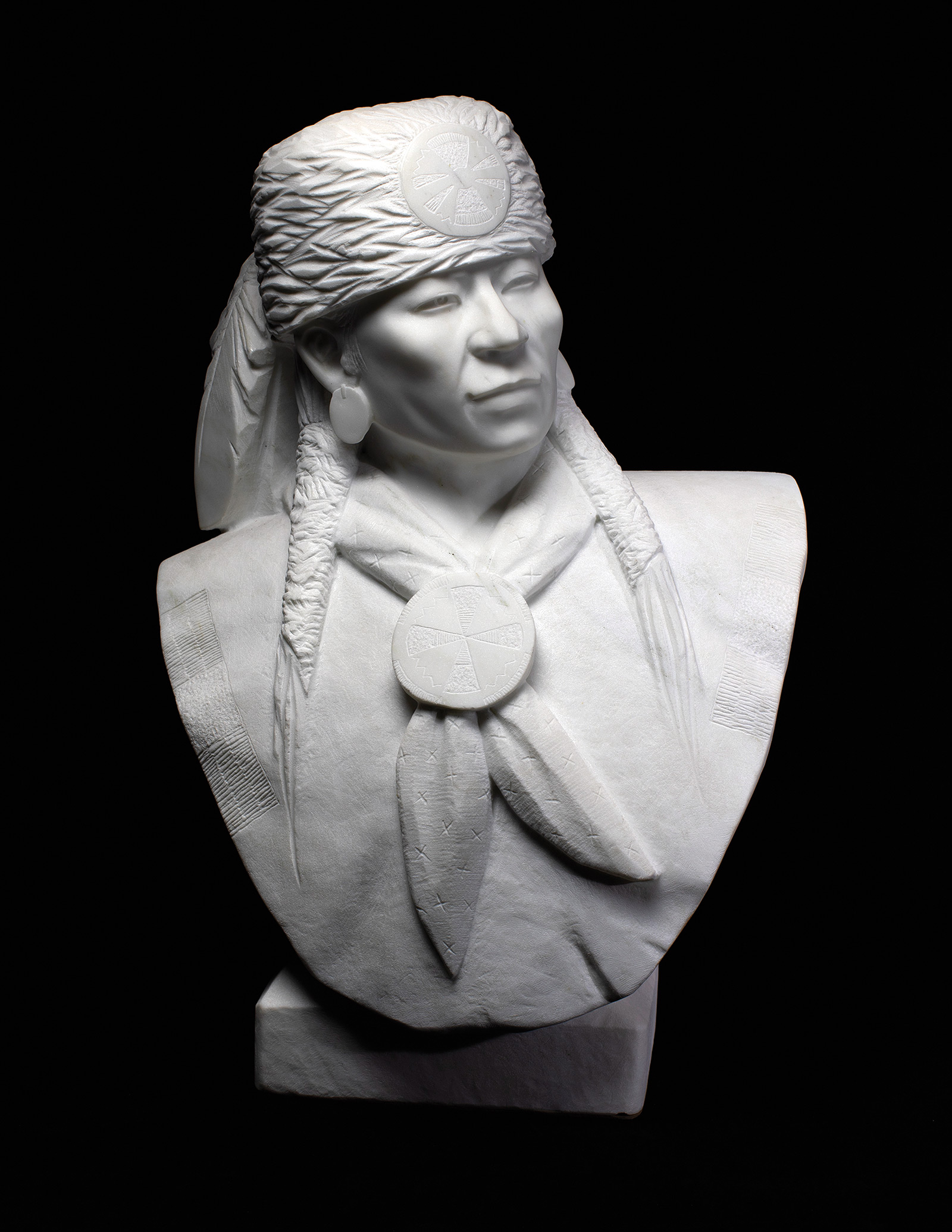 Capote Ute Delegate, Spanish marble, 28 x 19 x 12". Courtesy InSight Gallery, Fredericksburg, TX.
Another aspect he picked up from the Old Masters was their carving style. “For them, it was almost psychological. They were treating the stone like it was a person, and they would offend it if they were to grind too hard or hit it with hard blows,” he says. “They would carve with a rhythm: hard blow, soft blow, hard blow, soft blow. It was a very unique way of handling stone.”
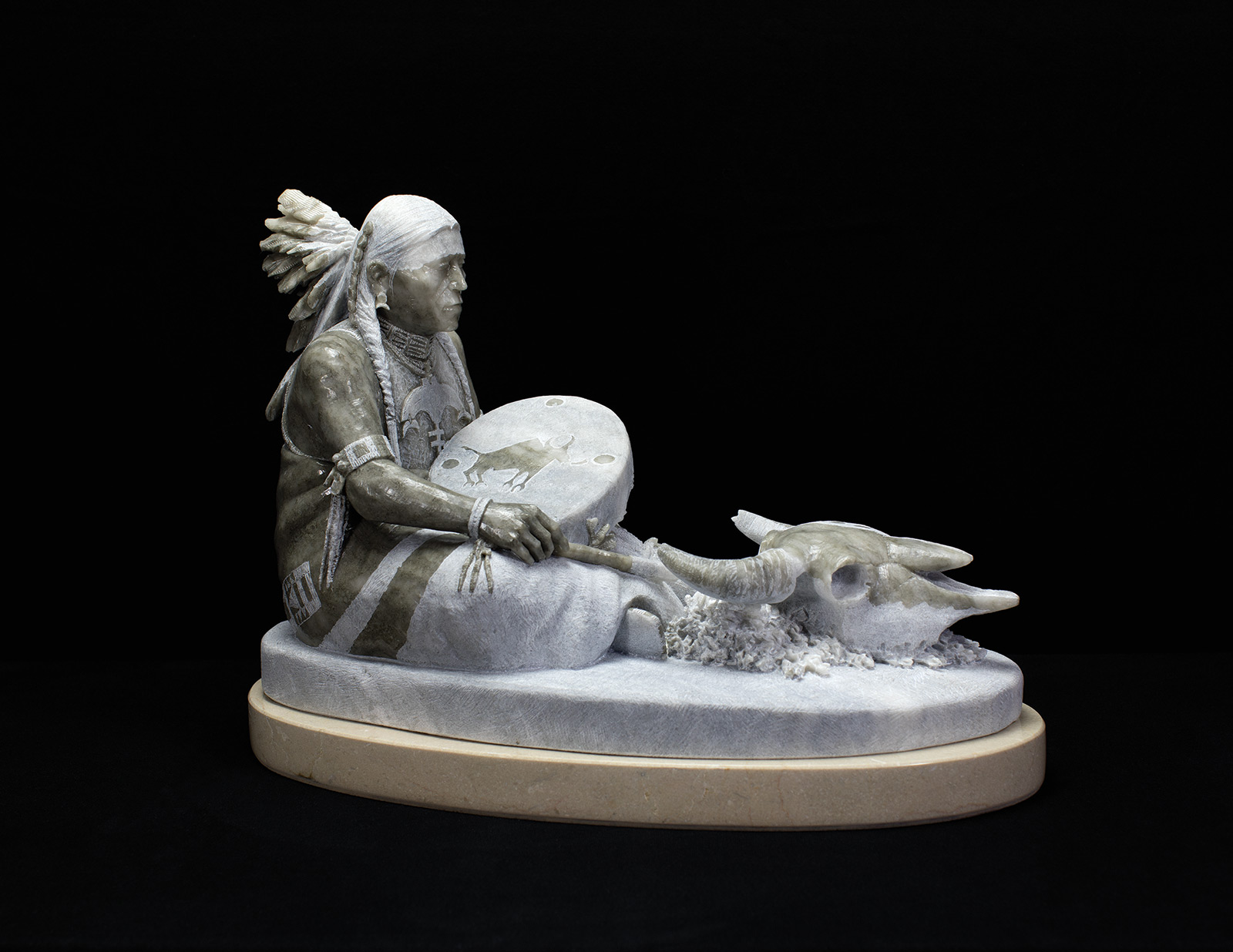 Prayer Song to the Buffalo Spirit
By 1993, Joe would join an exclusive club when he was asked to become a member of the Cowboy Artists of America, an art group originally formed in 1965 to celebrate the American West. He was the group’s first Native American member, though he was not the only stone carver. “Fritz White was in the group back then, but he would only do one stone piece every 20 or so pieces. I remember my first show with the CA, Fritz came up to me and swore at me, and told me to get my prices up,” Joe says. White’s intentions were twofold: First, he wanted his prices up because they were lower than his own, which created more interest in Joe’s work, and two, he needed to get his prices up because he had already proven his worth as a sculptor.
Joe is still a member of the CA today, and his paintings inspired by historic ledger art have struck a chord with the group and its collectors. But he’s also excited to be working in stone again, particularly for several major and quite large commissions still in the early planning stages. As if all that wasn’t enough, Joe is also a jewelry artist and is exploring new ideas related to music and performance. Every day in his studio is an adventure.
“Most of the pressure I feel in my studio is about time,” he says. “There’s just not enough time to do all I want to do.”
Powered by Froala Editor